How Thermal Mass Can Improve Building Energy Efficiency
In sustainable projects, the design of the building envelope impacts materials use, indoor air quality, life-cycle performance and energy efficiency. Achieving an energy-efficient envelope requires consideration of both R-value insulation and the thermal mass of the materials used throughout the wall assembly.
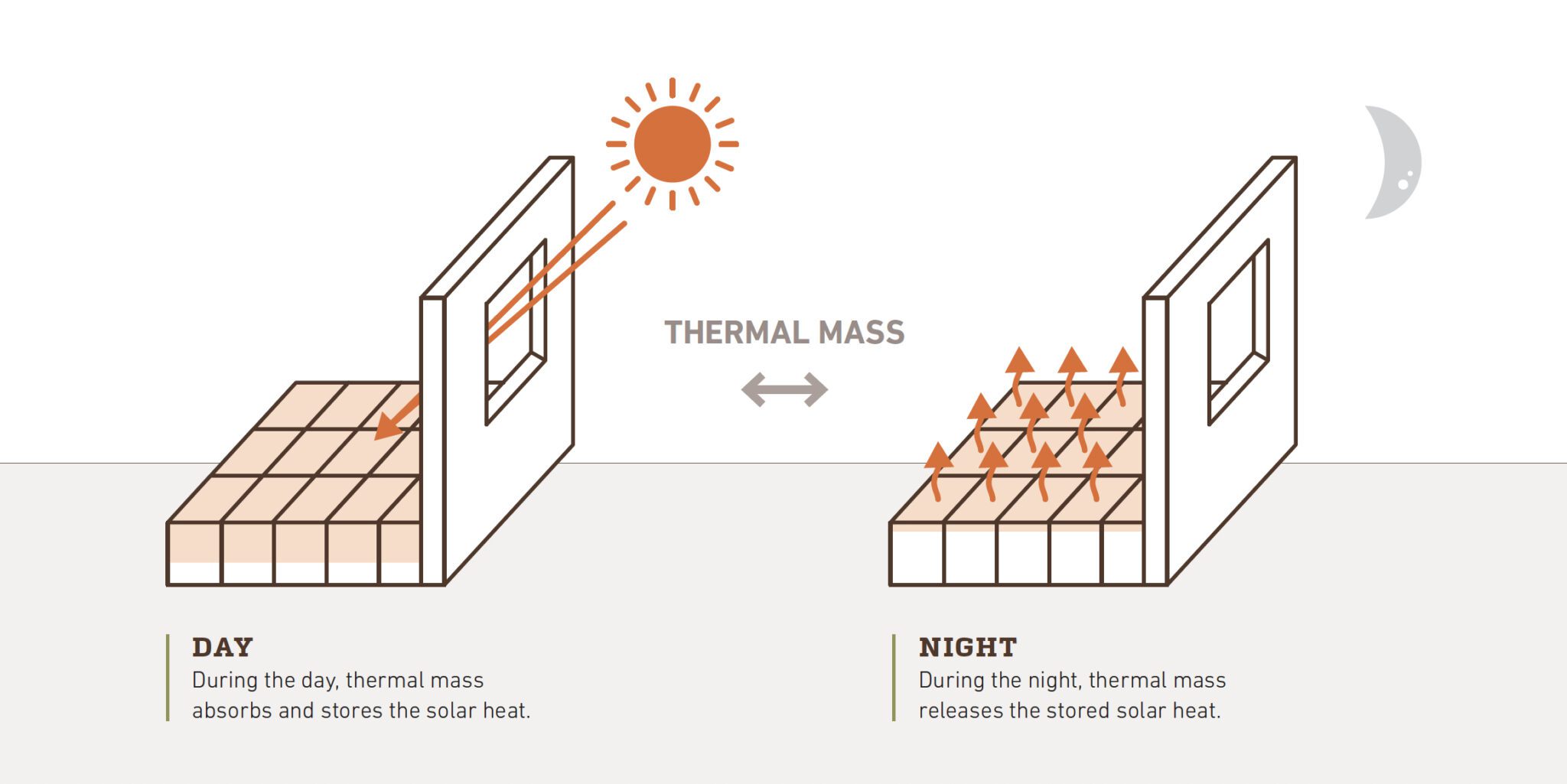
Thermal mass, such as that provided by a concrete masonry unit wall, absorbs and stores heat before gradually releasing it. This process helps reduce indoor temperature swings and can lower the heating and cooling demands placed on a building’s mechanical systems.
For architects and designers evaluating CMU block wall assemblies, considering thermal mass alongside insulation can provide a more complete picture of a wall system’s overall thermal performance.
How Does Thermal Mass Work with Wall Insulation?
Thermal mass and insulation perform different but complementary functions within the building envelope. Insulation resists heat transfer, while materials with high thermal mass absorb, store and release thermal energy over time.
In addition to potentially reducing HVAC system requirements and life-cycle heating and cooling costs, the proper use of thermal mass can contribute to reduced insulation requirements.
ASHRAE 90.1 recognizes the role thermal mass plays alongside insulation in reducing thermal transfer. As a result, mass wall assemblies may be able to meet energy-efficiency requirements differently than traditional stud wall systems. For example, a wall requirement calling for R-18 in another assembly may be satisfied by a high-thermal-mass masonry wall with a lower nominal R-value, depending on the applicable code and assembly.
This distinction is important when evaluating the R-value of insulation or comparing insulation strategies for different exterior wall assemblies. Nominal R-value alone does not account for the heat-storage capabilities of a high-mass masonry system.
The International Masonry Institute notes that masonry’s ability to enhance thermal performance can make it an effective component of passive building design. Passive strategies can help balance overall building performance with heating and air-conditioning requirements throughout the life of the structure.
Where Should Thermal Mass Be Used in the Building Envelope?
Researchers have noted that thermal mass is most effective when positioned on the interior side of the insulation within the building envelope. Applications can include:
- Load-bearing concrete masonry within a cavity wall system
- Interior concrete masonry walls
- Interior stone applications
This placement allows the masonry to absorb, store, and gradually release heat, helping moderate changes in indoor temperature.
When designing an insulated masonry assembly, the location of the thermal mass in relation to the exterior insulation is therefore an important consideration. Properly combining the two allows the insulation to slow heat transfer while the masonry moderates temperature fluctuations inside the building.
Insulated Concrete Masonry Units and High-Performance Wall Systems
Echelon Masonry offers solutions designed to combine the thermal mass benefits of concrete masonry with integral insulation.
The InsulTech™ Insulated Concrete Masonry System (ICMS) combines structural masonry, insulation and architectural finish capabilities within a high-performance wall system. This approach provides an option for projects considering insulated concrete masonry units as part of an energy-efficient building envelope.
Additionally, many Trenwyth® concrete masonry units offer the option for factory-installed expanded polystyrene insulation within the cells of the units.
More broadly, Echelon Masonry products provide varying levels of thermal mass that can contribute to the performance of the overall building envelope.
For architects considering insulation for concrete block walls, evaluating the entire wall assembly rather than insulation alone can help identify solutions that balance thermal performance, structural requirements, aesthetics and long-term durability.
Where Is Thermal Mass Most Effective?
Building materials with thermal mass can be especially advantageous in climates where there is a significant difference between daytime and nighttime outdoor temperatures, such as when nighttime temperatures fall at least 10 degrees below the thermostat set point.
Hot, dry climates with cool nights are particularly well suited to this strategy. Research has found that homes in these climates with high-thermal-mass exterior walls may require less energy for air conditioning than wood-framed homes with similar insulation but lower thermal mass.
However, thermal mass can provide benefits across a variety of climates.
In variable, four-season climates, thermal mass benefits may be maximized during spring and fall, when a building can absorb warmth during the day and cool through natural ventilation at night.
In colder regions where heating systems operate for much of the year, thermal mass can help store heat gained during the day through solar or mechanical means. That stored heat can then be released later, potentially reducing mechanical heating requirements during peak periods.
Understanding Concrete Block Insulation and R-Value
When evaluating the thermal performance of a masonry wall, it is important to look beyond a single concrete block insulation R-value. The performance of the complete wall assembly can depend on several factors, including:
- The type and thickness of the concrete masonry units
- The amount and placement of insulation
- Whether continuous or integral insulation is used
- The thermal mass of the masonry
- Interior and exterior finishes
- Local climate conditions
- Applicable energy-code requirements
For this reason, comparing an insulated masonry wall directly with a lightweight framed wall based only on nominal R-value may not provide a complete representation of how each assembly performs over time.
Save Now and Later with High-Thermal-Mass Masonry
Designing a building with high thermal mass can help reduce construction costs associated with insulation and HVAC systems while also contributing to lower energy demands throughout the life of the building.
Because many masonry wall systems offer high thermal mass alongside benefits such as moisture resistance, durability and façade aesthetics, masonry can address several building-envelope needs within a single solution.
Combining thermal mass with an appropriate insulation strategy can help architects create high-performance exterior walls designed to deliver both immediate construction benefits and long-term operational efficiency.
This article was first featured in MODERN MASONRY, Volume 2, Issue 1. Read the full issue here.
Want to Learn More About Energy-Efficient Masonry Walls?
Explore Echelon Masonry’s educational resources to learn more about exterior envelope R-value requirements, continuous insulation (CI), insulating concrete block walls, and masonry wall systems designed to meet energy-code requirements.
Related Content
-

Masonry in Hurricane-Prone Areas
In hurricane-prone regions, buildings face a range of severe weather threats. High winds, flying debris, driving rain,…
-

Masonry Construction for Wind and Debris Safety
High-wind events can threaten a building in more ways than one. Hurricanes and tornadoes create intense pressure…
-
Why Fire Stations Choose Masonry
Few buildings ask for more from their materials than fire stations. A firehouse must function as an…
-
Understanding Fire-Resistance Ratings
One hour. Two hours. Four hours. These durations commonly appear in building specifications as fire-resistance ratings, indicating…