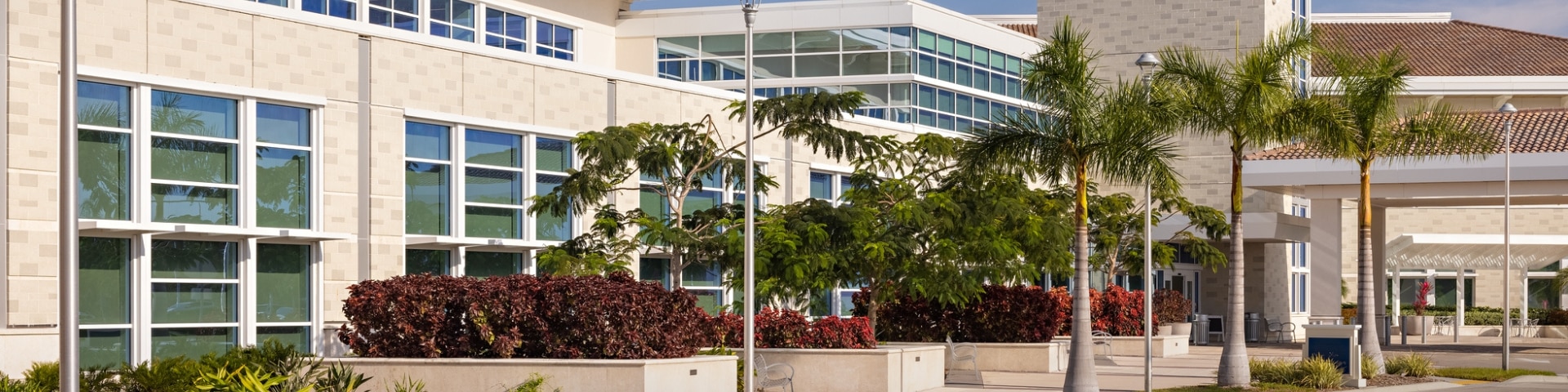
In hurricane-prone regions, buildings face a range of severe weather threats. High winds, flying debris, driving rain, storm surge and flooding can all test a structure’s performance. Once the storm passes, owners also need to clean, repair and return buildings to use as quickly as possible.
Material selection is an important part of resilient design. Properly designed and reinforced concrete masonry can provide the strength, durability and moisture resistance needed to help buildings withstand severe weather and recover more efficiently afterward.
Strength Against High Winds
High winds create significant lateral, uplift and overturning forces on a building. Reinforced concrete masonry is well-suited to resist those forces when incorporated into a properly engineered structure with a continuous load path from roof to foundation.
Appropriately reinforced and grouted masonry walls can also be designed to withstand extreme wind pressures and windborne debris. But resilience does not come from the block alone. Reinforcement, grout, connections, openings and other structural details all need to be designed for the conditions of the site.
A Smarter Approach To Flood Resilience
For coastal communities, wind is only part of the equation when it comes to the effects of hurricanes. Storm surge and flooding can expose buildings to water for hours, days or longer.
Concrete and concrete masonry are among the flood damage-resistant materials recognized by FEMA for appropriate applications below the base flood elevation. When assemblies are properly designed for flood exposure, masonry can offer advantages over materials that may swell, deteriorate or retain moisture after inundation.
Elevation is another critical strategy. Raising occupied areas and critical building systems above anticipated flood levels can reduce exposure, while durable materials at lower elevations can help make cleanup and recovery more manageable.
Two Louisiana schools rebuilt after Hurricane Katrina demonstrate how these strategies can work together.
Lessons Built From Katrina
When Hurricane Katrina devastated southeastern Louisiana in 2005, architects and builders were able to see firsthand which materials performed well and where construction practices needed to change.
At Arlene Meraux Elementary School in St. Bernard Parish, LACHIN Architects incorporated glazed concrete masonry extensively throughout the interior after studying the performance of materials in buildings damaged by Katrina.
Architect Peter Fortier, AIA, EDAC, noted that glazed masonry and tile were among the materials that weathered the flood exposure particularly well. That experience helped influence the new school, where masonry walls extend to a minimum of 10 feet and critical mechanical and electrical systems were relocated to the second level.
The design also considered what would happen after a future flood. As Fortier explained, “Once waters recede, we’ll be able to hose everything down and have everything back in working condition quickly.”
Farther south, South Plaquemines Elementary School faced an even more extreme challenge. Katrina’s storm surge destroyed every school in lower Plaquemines Parish, prompting Verges Rome Architects to design a replacement school with future flooding firmly in mind.
The occupied portion of the two-level South Plaquemines Elementary was raised 18 feet above grade. Below it, the ground level serves primarily as covered parking and outdoor space, allowing floodwater to pass through rather than placing classrooms and other critical spaces directly in harm’s way.
Echelon Trendstone Plus® architectural masonry was selected for the interior. Steve Rome, AIA, principal partner of Verges Rome Architects, said, “We chose it because it provided the aesthetic we wanted, is low-maintenance and durable.”
These projects demonstrate an important principle of resilient design: no single material or strategy does all the work. Elevation, structural design, building systems and material selection must work together.
Resilience That Lasts Beyond The Storm
The qualities that make masonry valuable in severe weather also provide benefits every day. Concrete masonry offers long-term durability and low maintenance, while Echelon architectural masonry gives designers a range of colors, textures and finishes to meet both performance and aesthetic goals.
For schools, municipal buildings, healthcare facilities and other structures that communities depend on, resilience is about more than surviving a storm. It is about reducing damage, simplifying recovery and creating buildings that can continue serving the people who rely on them.
In hurricane-prone areas, masonry can be more than a durable material choice. It can be an important part of building for what comes next.
Related Content
-

Masonry Construction for Wind and Debris Safety
High-wind events can threaten a building in more ways than one. Hurricanes and tornadoes create intense pressure…
-

Why Fire Stations Choose Masonry
Few buildings ask for more from their materials than fire stations. A firehouse must function as an…
-
Understanding Fire-Resistance Ratings
One hour. Two hours. Four hours. These durations commonly appear in building specifications as fire-resistance ratings, indicating…
-
Preventing Fire Damage Loss with Masonry
Fire protection in buildings is a critical consideration throughout a structure’s life, but the risk begins well…