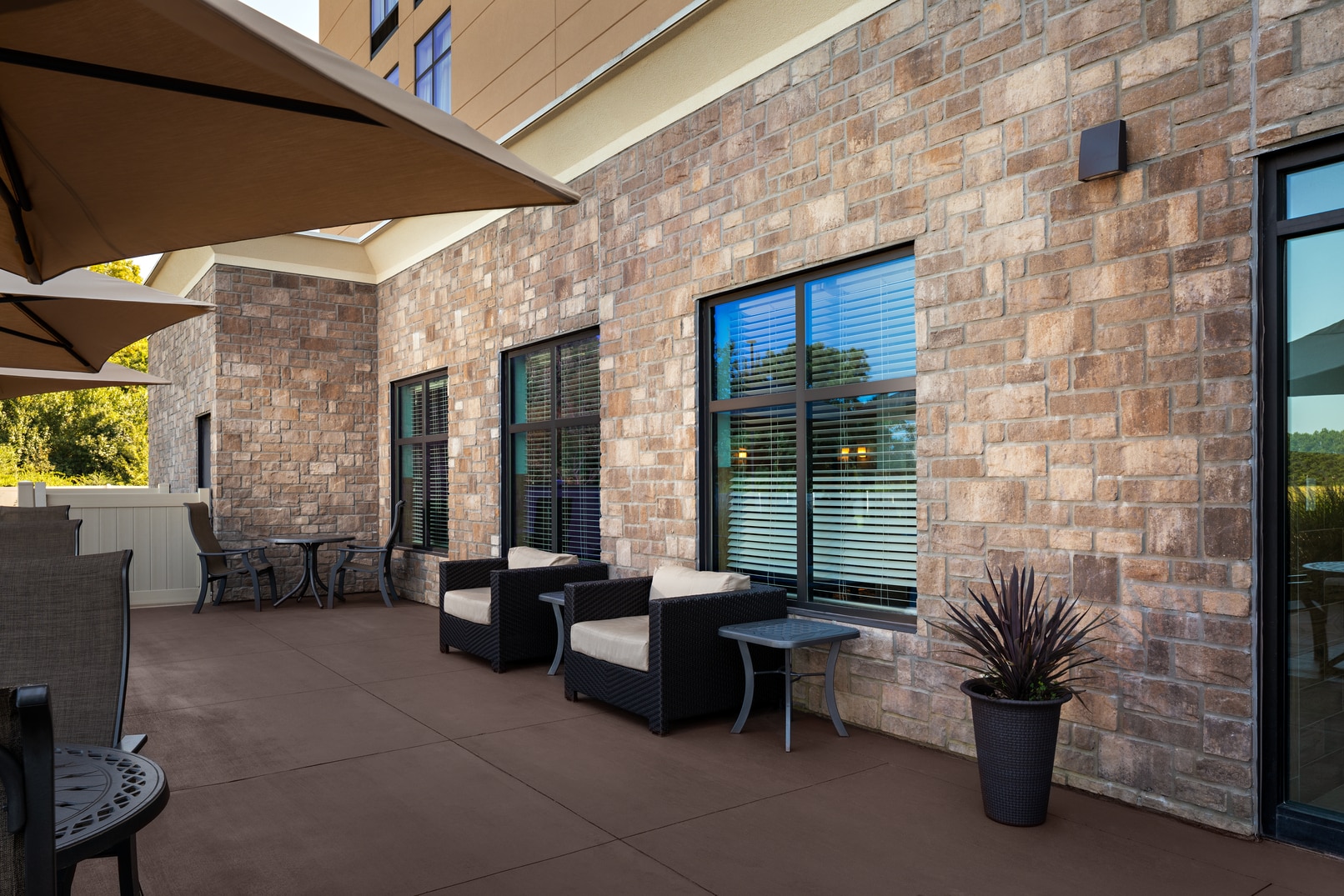
The way a masonry product is manufactured shapes everything from its appearance and installation efficiency to its long-term performance.
Echelon adhered and anchored architectural veneers and structural masonry are manufactured using the dry-cast process. This process uses a lower-moisture concrete mix that is densely compacted into precision molds, helping create masonry products with:
- Consistent dimensions
- Integral color
- The durability expected from concrete
CONSISTENCY THAT SUPPORTS EFFICIENT INSTALLATION
One of the biggest advantages of dry-cast masonry manufacturing is control.
Precision molds and tightly controlled production help create consistent dimensions from unit to unit. That dimensional accuracy can support cleaner layouts, reduce unnecessary adjustments in the field and make installation more efficient. This precision is important for both structural units and veneer, and is a benefit not offered by natural stone.
For designers, dimensional consistency also means greater predictability. Shapes, sizes and textures can be specified with confidence, helping preserve design intent from concept through construction.
Color That Goes Through The Unit
Dry-cast manufacturing also allows color to be integrated throughout the product rather than applied only to the surface, as it is with wet-cast veneer.
That means cuts, exposed edges and minor chips are less likely to reveal a dramatically different material underneath. The result is a more consistent appearance throughout the life of the wall and less waste during installation.
For architectural masonry, where color and finish are an important part of the design, that through-body color makes a meaningful difference.
Strength Built Into The Dry-cast Process
The dry-cast process uses compaction to create dense, durable concrete products engineered for long-term performance. That combination of controlled manufacturing and concrete durability makes dry-cast masonry well-suited for demanding exterior applications, high-traffic environments and projects where longevity matters.
Reliable strength also gives designers the flexibility to achieve a wide range of architectural expressions without giving up the inherent performance benefits of masonry.
Architectural Texture With Repeatability
Advances in mold technology allow dry-cast products to capture increasingly detailed textures while maintaining the consistency of a manufactured material. These innovations give architects access to stone-inspired surfaces, contemporary profiles and a broad range of finishes with greater control over color, scale and repetition. With Echelon, those aesthetic options are backed by the repeatability of consistent texture provided by the dry-cast manufacturing process across both its architectural veneers and structural masonry.
Performance From The Inside Out
The benefits of dry-cast manufacturing come down to control over dimensions, color, texture, density and performance. For Echelon, that process is foundational to its architectural veneers and structural masonry, helping deliver products that balance design flexibility, durability and installation efficiency.
How masonry is made matters. Dry-cast manufacturing helps ensure the finished product performs as intentionally as it was designed.
Related Content
-

Masonry in Hurricane-Prone Areas
In hurricane-prone regions, buildings face a range of severe weather threats. High winds, flying debris, driving rain,…
-

Masonry Construction for Wind and Debris Safety
High-wind events can threaten a building in more ways than one. Hurricanes and tornadoes create intense pressure…
-
Why Fire Stations Choose Masonry
Few buildings ask for more from their materials than fire stations. A firehouse must function as an…
-
Understanding Fire-Resistance Ratings
One hour. Two hours. Four hours. These durations commonly appear in building specifications as fire-resistance ratings, indicating…