Fire protection in buildings is a critical consideration throughout a structure’s life, but the risk begins well before construction is complete.
According to the National Fire Protection Association, buildings under construction experienced an annual average of approximately 4,440 fires and $370 million in direct property damage from 2017-2021. During construction, many active fire-protection systems may not yet be fully operational, making the materials themselves an important part of the building’s defense.
Concrete masonry provides passive fire protection that begins as soon as the wall is constructed and continues throughout the life of the building.
Fire Protection Built Into The Wall
Concrete masonry is noncombustible. It does not add fuel to a fire and can be used to create fire walls, fire barriers and fire partitions that help compartmentalize a building and limit the spread of fire.
Unlike active systems that depend on detection, power or mechanical operation, the fire-resistant qualities of masonry are inherent in the wall assembly. According to the Concrete Masonry & Hardscapes Association (CMHA), concrete masonry assemblies can achieve fire-resistance ratings of one to four hours depending on unit configuration, thickness, aggregate and the overall assembly.
That protection is valuable during construction, when sprinklers and other systems may not yet be operational, and after occupancy, when masonry becomes part of a broader life-safety strategy.
Helping Contain Potential Fire Damage
One of the fundamental goals of fire-resistant construction is compartmentation: keeping a fire from moving freely from one area of a building to another.
Properly designed masonry fire walls and barriers can help contain flames, heat and hot gases, providing occupants additional time to evacuate and firefighters more time to respond. Fire walls can also be designed to remain standing even if construction on one side collapses during a fire.
Concrete masonry can also offer advantages after a fire. CMHA notes that fire-exposed masonry walls may often be evaluated for repair rather than automatically requiring demolition and replacement, depending on the extent of the damage and loss of structural support.
Fire Resistance Without Sacrificing Design
Fire safety does not have to dictate a utilitarian aesthetic.
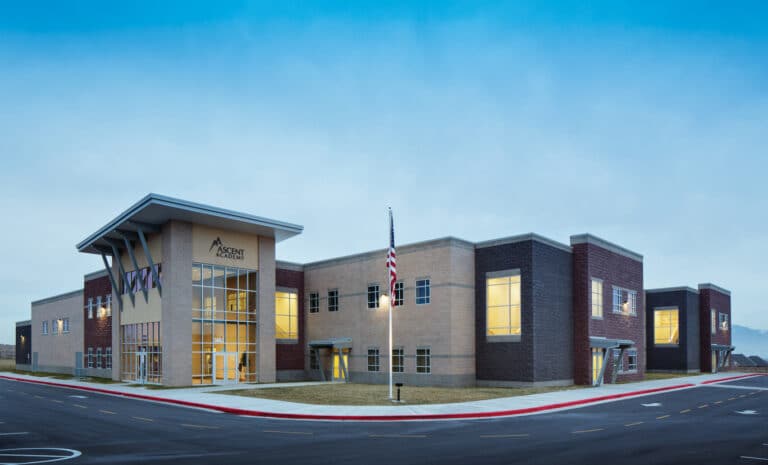
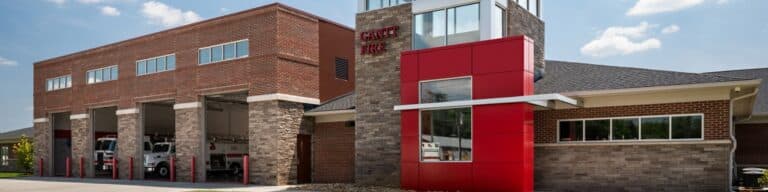
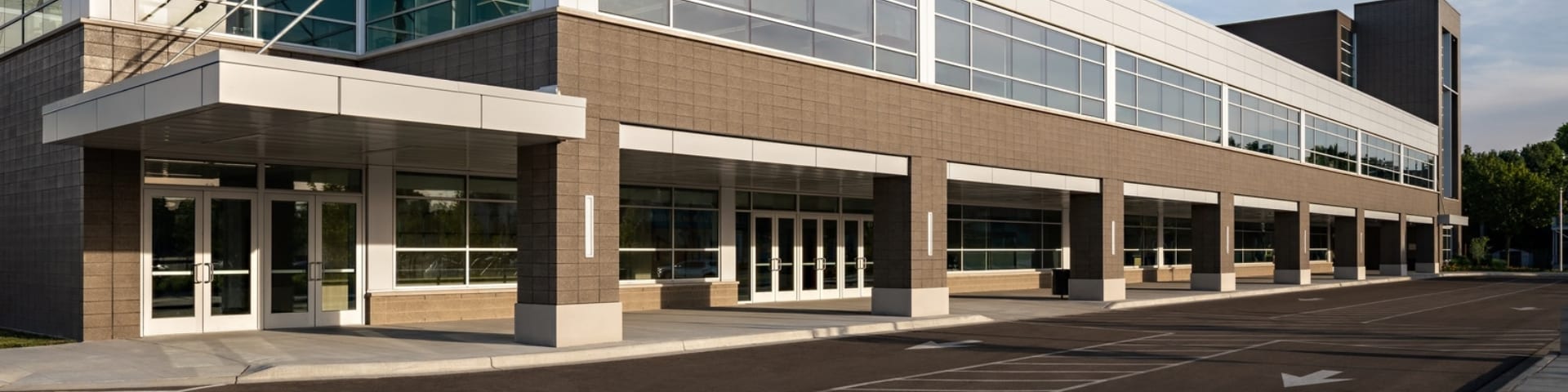
Echelon structural masonry combines the inherent durability and fire resistance of concrete masonry with a broad selection of architectural colors, textures, sizes and finishes. This diverse range allows designers to address life-safety requirements while maintaining the architectural character of the project.
The same wall can also contribute benefits beyond fire resistance, including impact resistance, sound control, thermal mass and long-term durability.
Building For More Than Code Minimums
Building codes establish minimum levels of protection, but material selection gives architects and owners an opportunity to think beyond the minimum. Specifying concrete masonry can provide passive protection during construction and throughout the building’s service life, which requires no activation and adds no combustible fuel to the structure.
When the goal is to reduce risk, protect occupants and limit the potential for catastrophic property loss, fire protection begins with the masonry wall itself.
Related Content
-

Masonry in Hurricane-Prone Areas
In hurricane-prone regions, buildings face a range of severe weather threats. High winds, flying debris, driving rain,…
-

Masonry Construction for Wind and Debris Safety
High-wind events can threaten a building in more ways than one. Hurricanes and tornadoes create intense pressure…
-
Why Fire Stations Choose Masonry
Few buildings ask for more from their materials than fire stations. A firehouse must function as an…
-
Understanding Fire-Resistance Ratings
One hour. Two hours. Four hours. These durations commonly appear in building specifications as fire-resistance ratings, indicating…