Mortar plays a critical role in how masonry accommodates movement over time. The right mortar for masonry projects, paired with proper jointing and detailing, can help control cracking and support long-term wall performance.
As part of a long-term master plan for new educational facilities in Columbia, South Carolina, Richland School District Two, incorporated Echelon masonry veneer on several school projects, including Westwood High School, the Richland Two Institute of Innovation and Jackson Creek Elementary School.
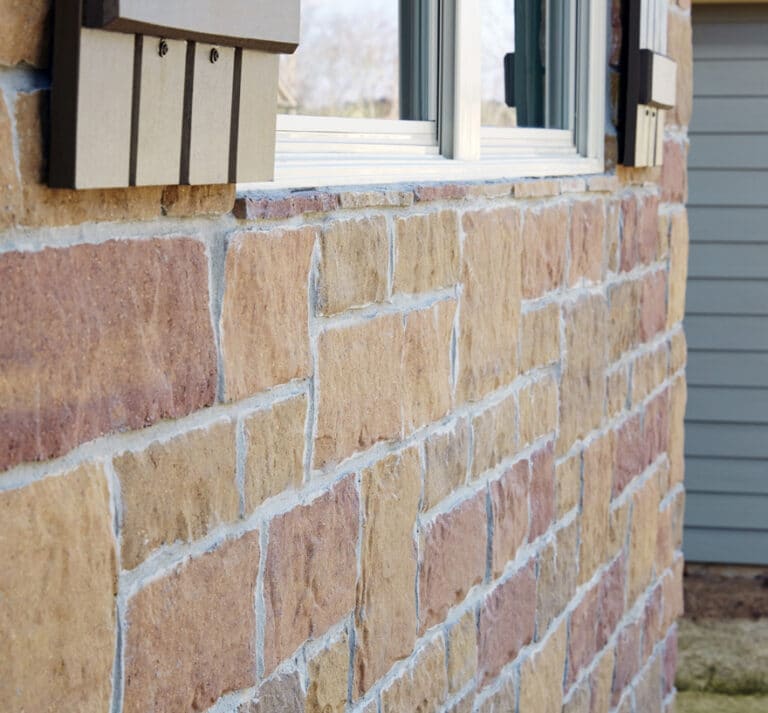
When LS3P Associates began designing Jackson Creek Elementary School, the firm sought to incorporate a stone aesthetic along with brick and precast materials. The architect selected Echelon Lamina Stone veneer, which provides the appearance of natural stacked stone.
Long-term maintenance was also an important consideration. For the original project, Echelon partnered with Amerimix to supply a specially formulated pumpable mortar designed to provide added flexibility and help resist cracking. Amerimix also created a custom mortar color to coordinate with the Lamina Stone and thin brick used elsewhere on the school.
Mortar plays an important role in both the appearance and long-term performance of masonry. Proper mortar selection helps provide the bond, durability and flexibility needed for the application, while factory-preblended mortars offer controlled proportioning and batch-to-batch consistency. Current Amerimix masonry mortars are engineered to applicable ASTM C270 and ASTM C1714 requirements.
Crack control, however, goes beyond the mortar itself. Current Concrete Masonry & Hardscapes Association guidance emphasizes that masonry movement caused by moisture, temperature change, settlement and other conditions must be accommodated through appropriate detailing. Depending on the assembly, properly located control joints and horizontal reinforcement can help mitigate shrinkage-related cracking.
For Jackson Creek Elementary, attention to both the masonry units and mortar helped the design team achieve the desired aesthetic while keeping long-term performance and maintenance in mind.
Related Content
-

Managing Moisture with Masonry
Moisture is one of the most persistent threats to a building envelope, the exterior system of walls,…
-

Tips & Techniques for Working with Veneers
Advances in stone veneers have made both full and thin varieties suitable replacements for natural stone in many…