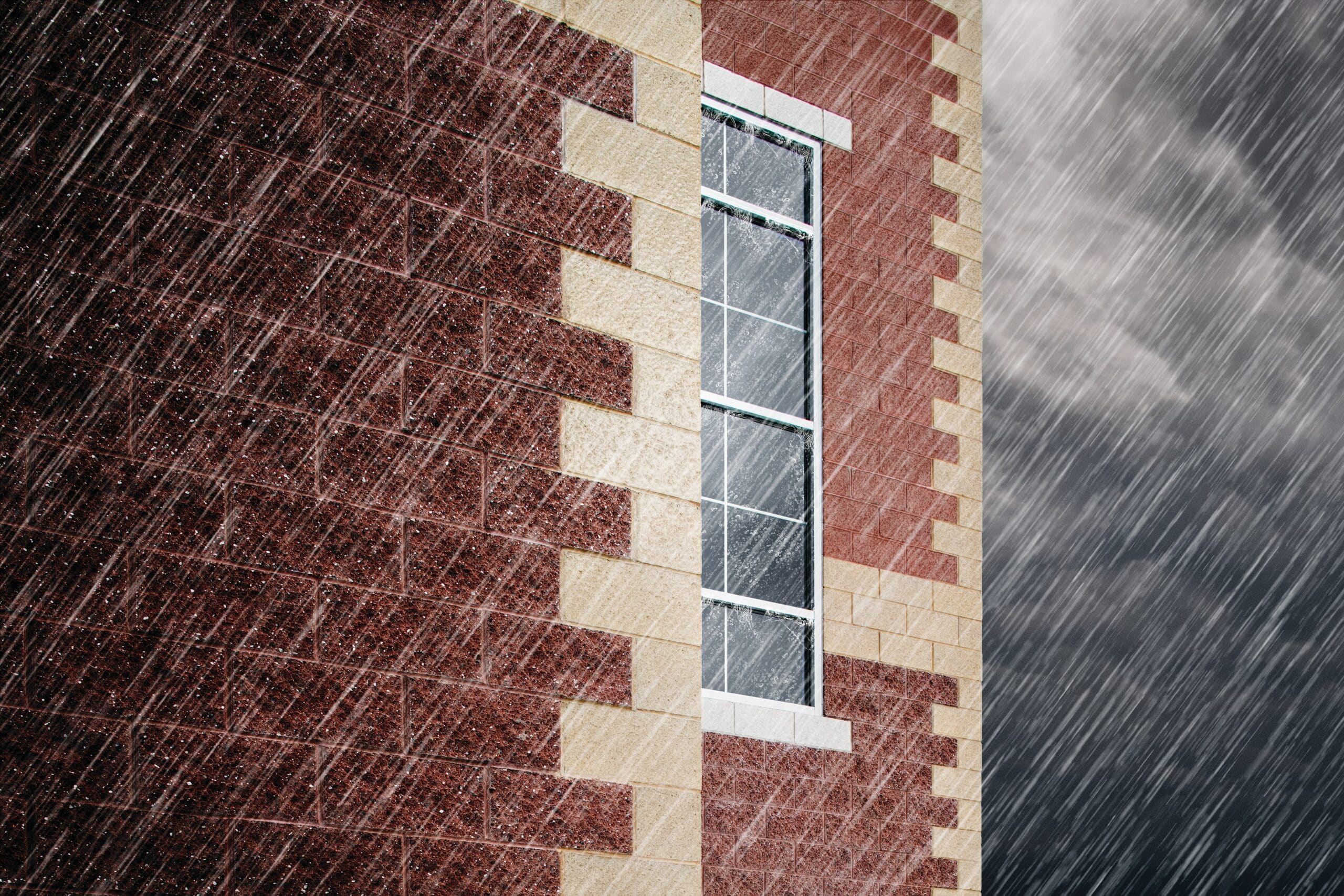
Moisture is one of the most persistent threats to a building envelope, the exterior system of walls, roofs, windows, and other components that separate the interior from outdoor conditions. In masonry construction, managing moisture throughout this system is essential. Left unmanaged, water intrusion can contribute to mold, deterioration, corrosion, reduced thermal performance and efflorescence.
The most effective defense is not a single product or detail, but a coordinated approach that helps keep water out and directs any moisture that does penetrate safely away from the building.
Concrete masonry can play an important role in that strategy. But like any exterior wall material, its performance depends on proper design, detailing and installation.
Build In Redundancy
Successful moisture management starts with layers of protection.
A well-designed masonry wall may use a combination of flashing and counterflashing, weeps, vents, sealants, integral water-repellent admixtures, post-applied treatments, vapor control and appropriate crack-control measures. Not all strategies apply to every wall system, but using multiple lines of defense helps protect the assembly if one component fails.
In cavity wall construction, water that passes through the exterior wythe should have a clear path down and out of the assembly. Proper flashing, drainage space and weeps help prevent moisture from collecting inside the wall.
Single-wythe masonry requires its own moisture-management strategy. Properly detailed walls may combine integral water-repellent admixtures with flashing, weeps, appropriate joint treatment and surface protection to limit water penetration and manage moisture that enters the assembly.
Put Moisture Protection Into The Masonry Itself
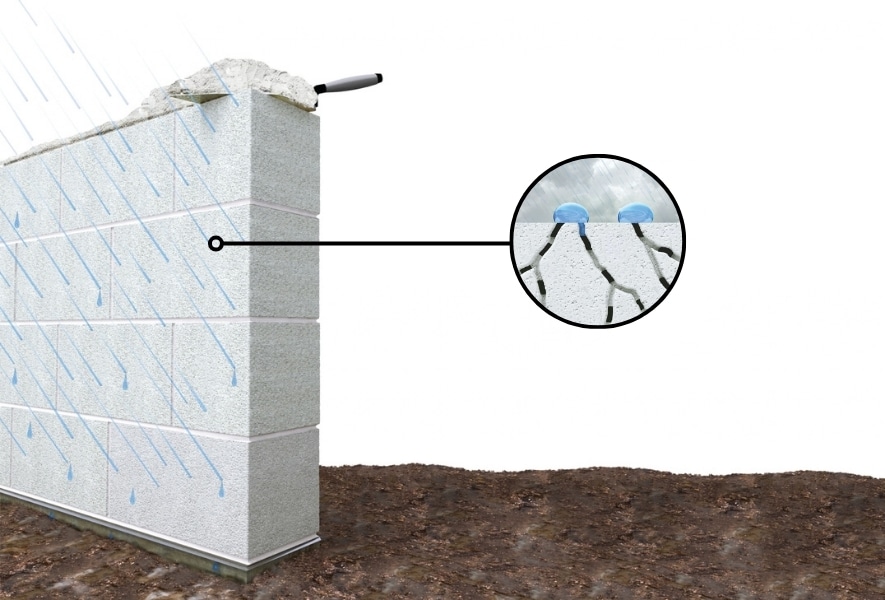
Integral water-repellent admixtures add another layer of defense by reducing the amount of water that masonry units absorb through capillary action.
Echelon masonry units can be manufactured with an integral water-repellent admixture. Because the admixture is incorporated during manufacturing, it becomes part of the masonry unit rather than a surface coating that wears over time.
Water resistance can be further enhanced by pairing Echelon masonry units with compatible Amerimix pre-blended mortar formulated with a water-repellent admixture, helping extend moisture protection through both the masonry unit and mortar joints.
However, even the use of enhancements does not eliminate the need for good wall design. Flashing, drainage, weeps, proper joint tooling and installation remain essential. Integral water repellents simply provide another line of defense within a broader moisture-management strategy.
Think Beyond The Exterior Surface
Moisture can reach a wall from more than one direction. Rain and wind-driven water are obvious concerns, but water vapor and condensation can also affect wall assemblies from the interior.
Proper ventilation, vapor control and material selection should therefore be considered along with exterior moisture protection. The goal is not simply to stop water at the surface—It is to design an assembly that controls moisture movement and provides a path for drying when moisture does enter.
For architects and building owners, that layered approach can help protect more than the appearance of a building. Thoughtful moisture management supports the long-term performance of the entire wall assembly.
Related Content
-

Reducing Mortar Cracks for Lasting Masonry
Mortar plays a critical role in how masonry accommodates movement over time. The right mortar for masonry…
-

Tips & Techniques for Working with Veneers
Advances in stone veneers have made both full and thin varieties suitable replacements for natural stone in many…